How do we hold on to a trip after it’s over?
A hand-made cultural probe that turned one traveller’s memories into design insight — a Human-Centred Design study from question, to kit, to six product directions.
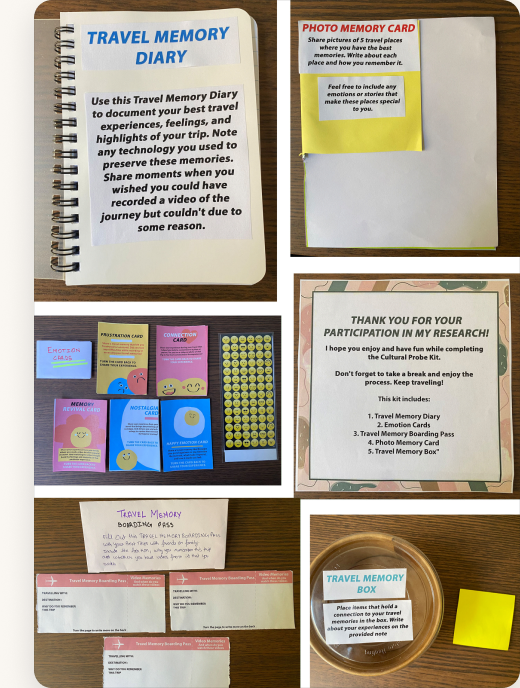
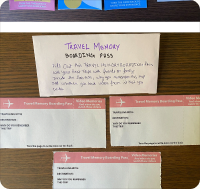
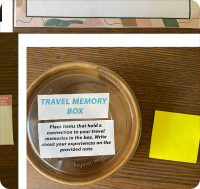
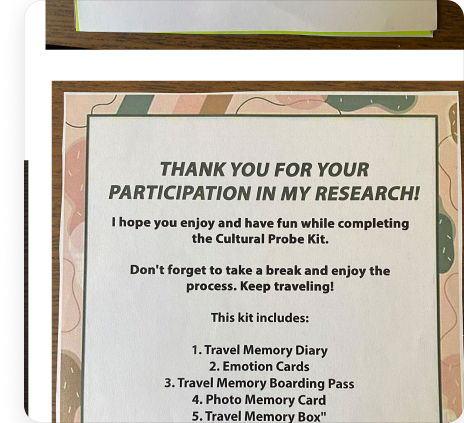
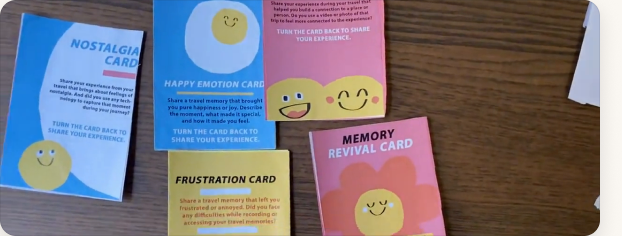
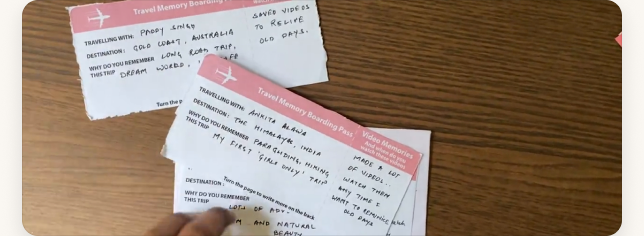
Each element of the cultural probe invites a different kind of answer — write it, feel it, photograph it, collect it.

The trip’s highlights, feelings, and the tech used to keep them.

Name the feeling behind a memory — nostalgia, frustration, joy.

Five places, the pictures, and how each one is remembered.

Five best trips — where, who with, and why they stuck.

Physical objects that carry a memory, with a note on each.
How can people record, save and revisit travel memories — without storage, access or technology getting in the way?
Solo cultural probe — I designed the kit, ran it, analysed the responses and wrote it up.
Built on a group interview study — 18 interviews, transcribed and thematically analysed.
32405 Human-Centred Design Research Methods, UTS · tutor Dr Alejandra Mery Keitel.
Cultural probe → exit interview → thematic analysis.
Insight + six product concepts — a discovery study, not a built product.
Phones make it effortless to record a trip. But the memories scatter — across camera rolls, the cloud, social posts, old DVDs and drawers — and how we actually relive them is an afterthought.
How can people easily record, save and revisit their travel memories — without storage, access or technology getting in the way?
Seeded by the interview study: one participant had memories saved on a DVD she could no longer play.
The team ran 18 interviews on how people remember trips, then coded them thematically.
I designed a 5-element kit and gave it to a participant to self-document over time.
A follow-up interview, then thematic analysis to turn the responses into insight.
The interview study was group work; the cultural probe and the paper are my individual assessments.
A probe isn’t a survey. It invites slow, self-directed, emotional reflection — and surfaces what people wouldn’t think to say in an interview.
Each element targets a different modality — write it, feel it, photograph it, collect it — so the data comes back rich and varied. The kit even opens with a “thank you,” because a probe someone enjoys is a probe they’ll actually finish.


The emotion cards laid out, and the participant’s own filled-in responses — one participant, anonymised, with signed consent.
Smartphone, cloud and Instagram are how she keeps and revisits trips — and spontaneous capture feels more natural than planned.
She keeps rocks and boarding passes — small objects that carry a whole trip.
The Emotion Cards surfaced a blend of feelings, not just the good ones — memory is layered.
It made her consider keeping a travel journal for the first time — pen-and-paper alongside digital.
When she feels low, she looks back at her trips — and it brings her joy.
Give people a creative way to reflect, and they don’t just remember differently — they start new habits.
Concepts generated from the probe — directions, not built products.
Save, sort & scan every travel memento — videos to tickets — in one place.
Auto-organise travel visuals by the emotion behind them.
Relive a trip in an immersive photo & video space.
Prompt-led journaling for travel tales and feelings.
Combine media into shared, collaborative travel stories.
Nudges about past trips, with suggestions to revisit.
These six ideas came from probe insights. They are concept directions, not shipped products or final UI screens.
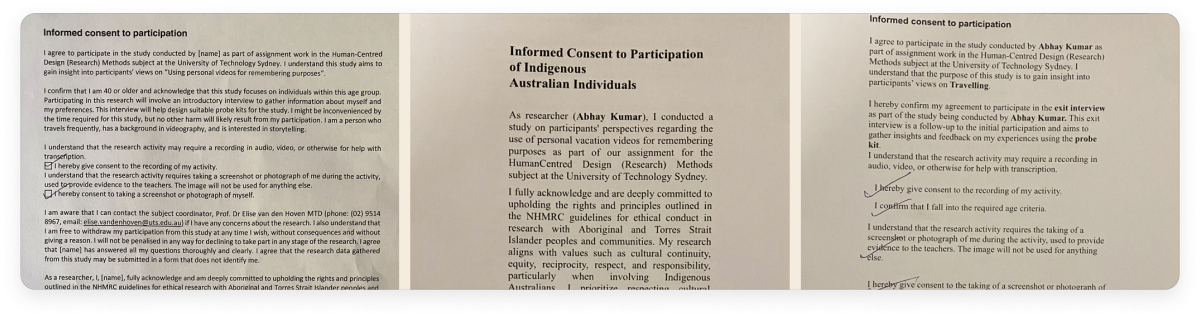
Every participant gave informed, written consent — to take part, to be recorded and photographed, and to withdraw at any time. A separate exit-interview consent covered the follow-up. And because the study could involve Aboriginal and Torres Strait Islander participants, I prepared an Indigenous-specific consent aligned to the NHMRC values: cultural continuity, equity, reciprocity, respect and responsibility.
Signed consent forms (incl. the Indigenous/NHMRC form) — shown as evidence of ethical practice, not a claim of deep community partnership.
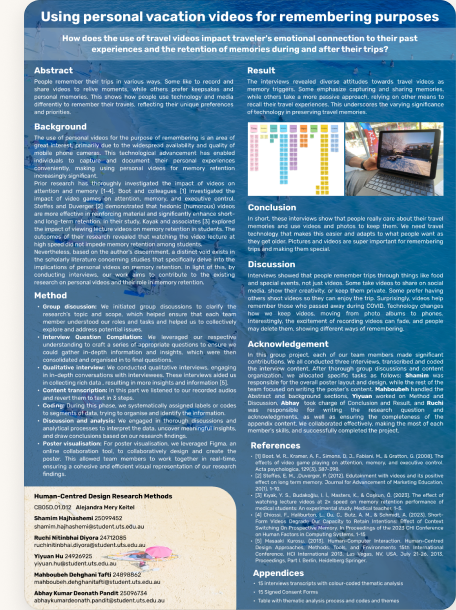
Before the probe, the team ran an interview study — “Using personal vacation videos for remembering purposes.” We conducted 18 interviews, transcribed them, colour-coded them, and ran a thematic analysis, summarised on a research poster built in Figma.
My part: three interviews, transcription and coding, and contributing to the poster. The probe built directly on what these conversations surfaced — including the participant who’d saved memories on a DVD she could no longer play.

“The kit didn’t just collect answers — it changed how the participant thought about her own memories. That’s the power of designing the research, not just running it.”
Designing each element forced me to think in modalities and emotions, not just questions. The ethics work — especially the Indigenous consent — reset my bar for participant care. If I took it further, I’d run the probe with more participants and prototype the strongest concept: the Memory Journal.